


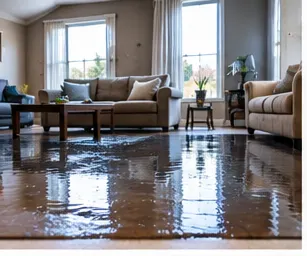
Mesquite Water Damage: A Practical Guide for Property Owners
Water damage rarely stays where it starts. Here's how it spreads through Mesquite homes and buildings, what you can do right away and how professional drying brings a property back to normal.
Where Water Damage Starts in Mesquite Homes
Many Mesquite neighborhoods were built in the 1960s through the 1980s, and original supply lines, shutoff valves and water heaters in those homes are now decades old. Slow drips from aging fittings often go unnoticed until flooring buckles or a ceiling stains.
Newer homes have their own weak points. Braided appliance hoses, plastic ice-maker lines and second-floor laundry rooms can release a large amount of water in a short time, especially when nobody is home.
How Water Travels Through a Structure
Water moves down and out. It runs under baseboards, soaks into carpet pad, and climbs drywall through capillary action, sometimes rising a foot or more above the visible waterline.
On slab foundations, which are common across Mesquite, water can spread beneath vinyl plank and tile and stay trapped there. That is why surface drying alone often leaves moisture behind.
What to Do in the First Hour
Shut off the water at the fixture or at the main valve, usually near the street or in the garage. If water is near outlets or the electrical panel, keep clear and turn off power only if you can do so safely.
Move rugs, electronics and furniture off wet floors, place foil under furniture legs you can't move, and take photos and video of everything before cleanup starts.
Clean, Gray and Black Water
Not all water is the same. A broken supply line is usually clean water, while dishwasher or washing machine discharge is gray water and may carry soaps and bacteria.
Sewage backups and rising flood water are considered black water and need stricter cleanup, including removal of porous materials it touched. See our emergency restoration in Mesquite page for urgent sewage situations.
Why Professional Drying Matters
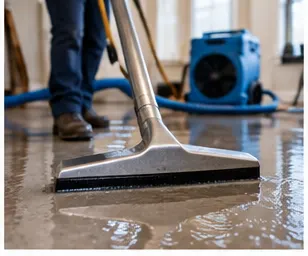
Fans and open windows help, but Texas humidity can actually slow drying when outdoor air is damp. Commercial dehumidifiers remove moisture from the air so materials can release it faster.
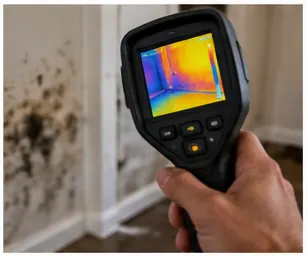
Daily moisture readings show whether drying is working and when equipment can be removed. Without readings, it's hard to know whether a wall or subfloor is truly dry.
Preventing Mold After a Water Loss
Mold needs moisture, a food source like drywall paper or wood, and time. Fast, thorough drying removes the moisture part of that equation.
If you notice a musty odor or discoloration after a leak, our Mesquite mold remediation team can evaluate whether moisture or growth remains.
Storm and Roof-Related Water Intrusion
Heavy spring storms in Dallas County can push wind-driven rain past flashing, windows and damaged shingles. Water often appears in ceilings and attics first.
When storms cause the leak, the opening needs to be protected before interior drying begins. Learn more about storm damage restoration in Mesquite.
Water Damage in Mesquite Businesses
Retail stores, offices and warehouses along Town East Boulevard, I-635 and US-80 face the same plumbing and storm risks as homes, but on a larger scale and with downtime costs.
Our commercial restoration services in Mesquite focus on fast extraction and drying plans built around keeping your operation running where possible.
Insurance Tips After Water Damage
Most policies treat sudden events, such as a burst pipe, differently from long-term leaks. Review your policy and call your carrier early.
Keep receipts for any emergency expenses, save damaged items until the adjuster sees them when practical, and request copies of moisture logs and photos from your restoration company.
More Restoration Help in Mesquite
ARS also handles fire and smoke damage restoration in Mesquite and broader restoration services across Mesquite.
When you're ready, contact ARS or call 972-287-5856 to get help started.