

After a Fire in Mesquite: What to Know About Recovery
Fire recovery involves smoke, soot, water and structural concerns all at once. This guide walks through the stages so you know what to expect.
Safety Comes First
Don't re-enter a fire-damaged property until the fire department says it's safe. Structural damage, electrical hazards and lingering smoke can all be dangerous.
Once cleared, wear gloves and a mask if you need to retrieve essentials, and avoid touching soot-covered surfaces.
Types of Smoke Residue
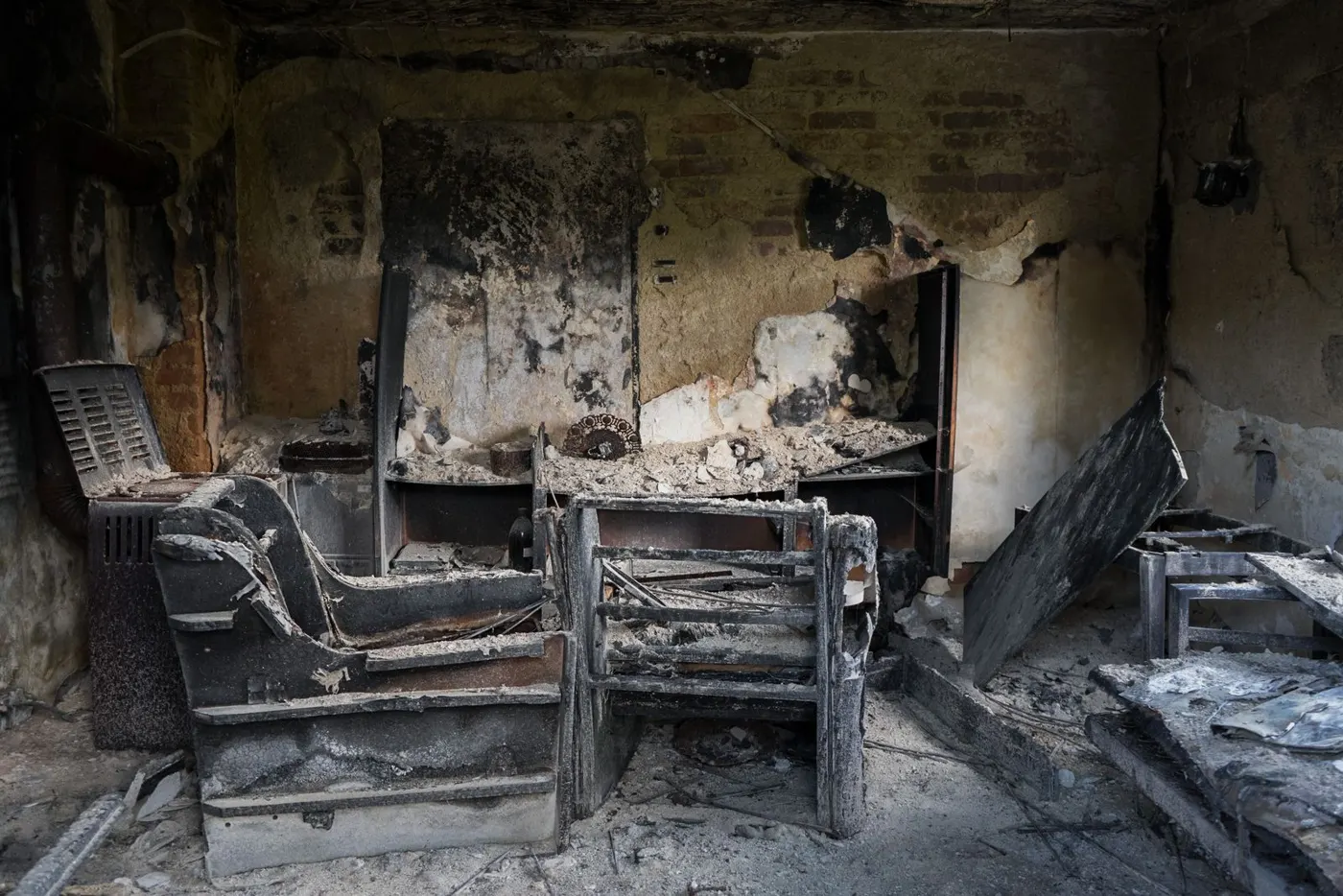
Fast-burning paper and wood fires often leave dry, powdery soot. Slower fires involving plastics and synthetics leave a sticky residue that smears easily.
Kitchen protein fires can leave a nearly invisible film with a strong odor. Each type calls for a different cleaning method.
How Smoke Travels Through a Home
Smoke follows air pressure and temperature, moving toward cooler areas and through gaps around outlets, attics and the HVAC system.
That's why rooms far from the fire can still smell like smoke and show light soot on walls, especially near vents.
The Water Side of Fire Damage
Firefighting water soaks insulation, drywall and flooring. Left alone, it can lead to warping and mold within days.
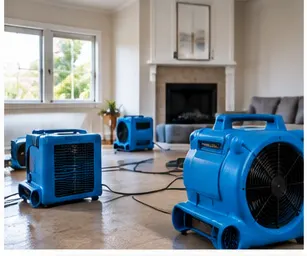
The same drying process used for water damage restoration in Mesquite applies here, with moisture readings guiding when the structure is dry.
Why Odor Removal Takes More Than Air Freshener
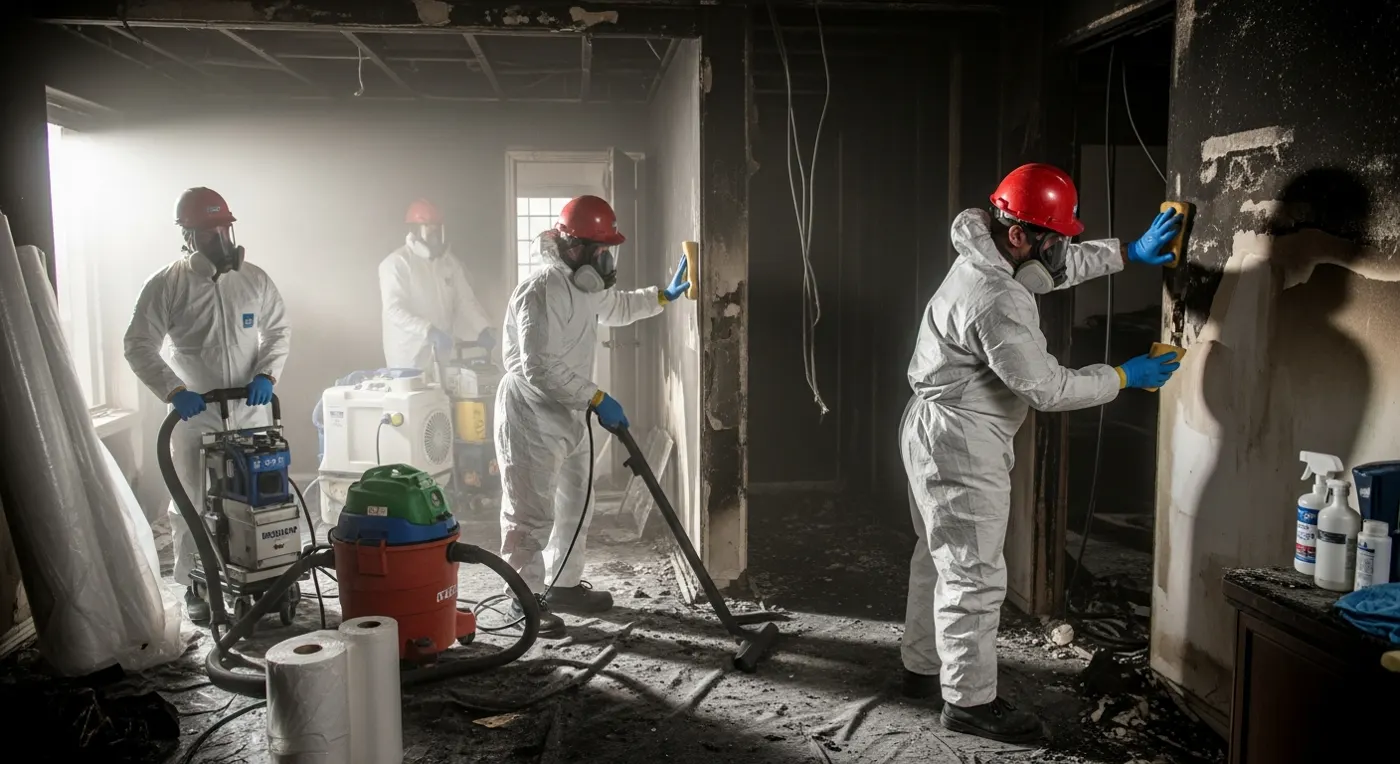
Fragrances only cover smoke odor temporarily. Effective treatment removes charred materials, cleans surfaces and treats remaining odor at its source.
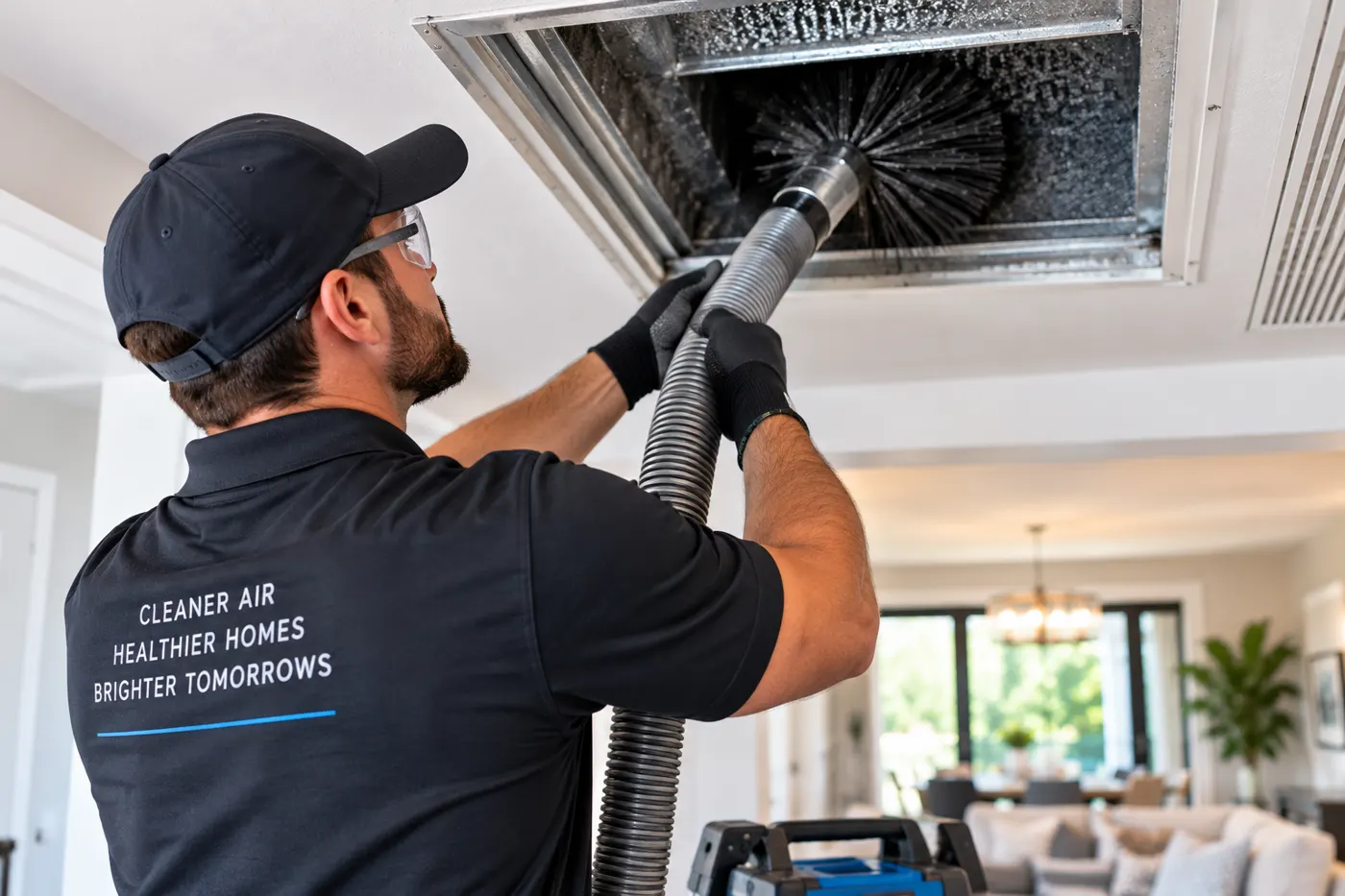
HVAC systems can recirculate odor if ducts and filters hold smoke residue, so they're part of the evaluation.
Protecting the Property After the Fire
Broken windows, damaged roofs and forced doors leave a property exposed. Board-up and tarping prevent rain from adding to the damage.
If a storm hits a fire-damaged roof, see our storm damage restoration in Mesquite page for how wind and rain intrusion is handled.
Mold Risk After Fire
When water from suppression isn't fully dried, mold can develop behind walls and under floors.
If you notice a musty smell weeks after a fire, our mold remediation in Mesquite team can check for remaining moisture.
Contents and Belongings
Many belongings can be cleaned, especially hard items. Porous items with heavy soot or odor may not be salvageable.
Make an inventory with photos before discarding anything, as your insurance carrier may need it.
Fires in Mesquite Businesses
Restaurant kitchen fires, electrical fires and warehouse incidents can shut down a business quickly.
Learn how commercial restoration in Mesquite focuses on safe cleanup and getting operations back on track.
Common Causes of Fires in Mesquite Homes
Unattended cooking, space heaters placed too close to furniture, dryer lint buildup and aging electrical wiring are frequent causes of residential fires across North Texas.
Cleaning dryer vents, testing smoke alarms monthly and keeping a kitchen extinguisher within reach are simple steps that lower the risk.
What a Fire Restoration Timeline Looks Like
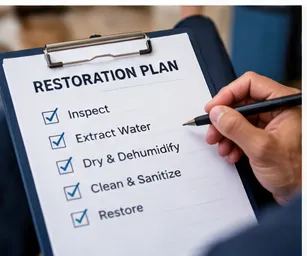
The first days focus on securing the structure, removing water and stabilizing conditions. Cleaning and odor treatment follow, then removal of damaged materials so repairs can begin.
Larger losses take longer, but clear updates at each stage help you plan around the work and keep your insurance adjuster informed.
Working With Your Insurance After a Fire
Report the fire to your carrier as soon as possible and ask about additional living expenses if you can't stay in the home.
Keep receipts for hotels, meals and emergency purchases, and request copies of photos and cleaning records from your restoration team.
Getting Started
For other needs, ARS offers broader restoration services in Mesquite and 24/7 emergency restoration in Mesquite.
To start fire recovery, contact ARS or call 972-287-5856.