
Air Duct & Dryer Vent Maintenance: What Homeowners Should Know
Clean air ducts and dryer vents affect more than comfort—they play a role in HVAC efficiency, energy costs, and home safety. Here's practical guidance for North Texas homeowners.
How do I know if my ducts actually need cleaning?
Visible dust blowing from vents, a musty smell when the HVAC runs, or noticeably uneven airflow between rooms are common signs worth investigating.
A quick check with a flashlight at a supply or return vent can also reveal buildup. If you see a heavy layer of dust or debris, it's a good sign your system is due for attention.
Can dirty ducts really raise my energy bill?
When dust and debris restrict airflow, HVAC systems have to work harder to move air through the home, which can increase energy usage over time.
Restricted airflow can also cause uneven heating and cooling, leading some homeowners to run their thermostat longer or lower than necessary to compensate.
How often should I clean my dryer vent?
Most homeowners should have their dryer vent inspected at least once a year, and more often for households that do frequent laundry loads.
Between professional cleanings, always clean the lint trap after every load and check the outside vent flap to make sure it opens freely when the dryer runs.
What are the warning signs of a clogged dryer vent?
Clothes taking longer than usual to dry, a hot laundry room, or a burning smell during operation are all signs airflow is restricted.
Because lint is highly flammable, a blocked vent that traps heat is one of the more overlooked fire risks in a home.
Does duct cleaning matter after a remodel?
Renovation work, especially drywall cutting, sanding, or flooring removal, generates fine dust that can settle inside ductwork and continue circulating long after the project is done.
Scheduling a duct cleaning after major remodeling helps prevent that construction dust from being redistributed throughout the home every time the HVAC system runs.
What can homeowners do between professional cleanings?
Change HVAC filters regularly, and choose a filter rated for your system's airflow requirements. A clogged filter contributes to the same dust buildup that ductwork cleaning addresses.
Vacuum around supply and return vents, and keep pet grooming and vacuuming consistent in homes with shedding pets, since pet dander is one of the fastest materials to accumulate in ducts.
Does duct cleaning help with allergies?
Removing accumulated dust, pollen, and pet dander from ductwork can reduce some of the airborne particles that trigger allergy symptoms for sensitive household members.
It works best as part of a broader approach that includes regular filter changes and controlling humidity, rather than as a stand-alone fix for severe allergies.
What should I ask before hiring a duct cleaning company?
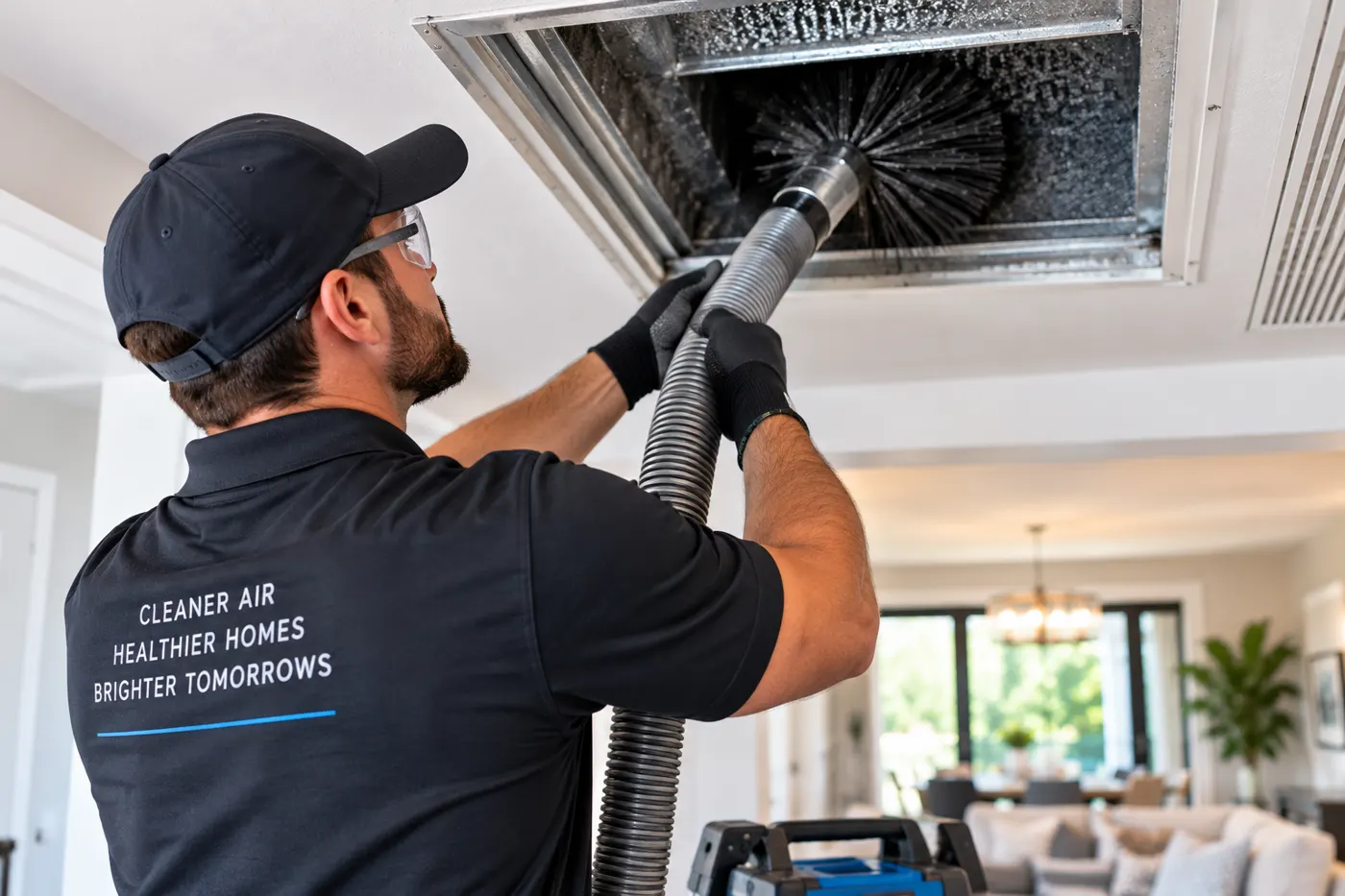
Ask what equipment they use, whether they inspect the system before and after cleaning, and if they photograph the ductwork so you can see the results.
A reputable company will explain their process clearly and won't pressure you into unnecessary add-on treatments before inspecting your system.
It also helps to confirm whether they clean the full duct run, including trunk lines, rather than just the visible registers, since debris can remain hidden further back in the system.
Does the season affect when I should schedule cleaning?
Many homeowners schedule duct cleaning in spring or fall, right before heavy air conditioning or heating use begins, so the system starts the season running cleaner and more efficiently.
Scheduling after allergy season or a dusty renovation can also make sense if you notice a sudden increase in symptoms or visible dust.